

HVAC Technician/Hybrid technicians combine technical skill, problem-solving, and attention to detail to keep homes and businesses comfortable year-round. With your HVAC Career Prep Certification, you’ll be ready to start as an apprentice, gain hands-on experience, and work toward becoming a fully certified professional.
Our online HVAC Technician/Hybrid Program offers flexible, interactive training designed to prepare you for a successful career in the trades.
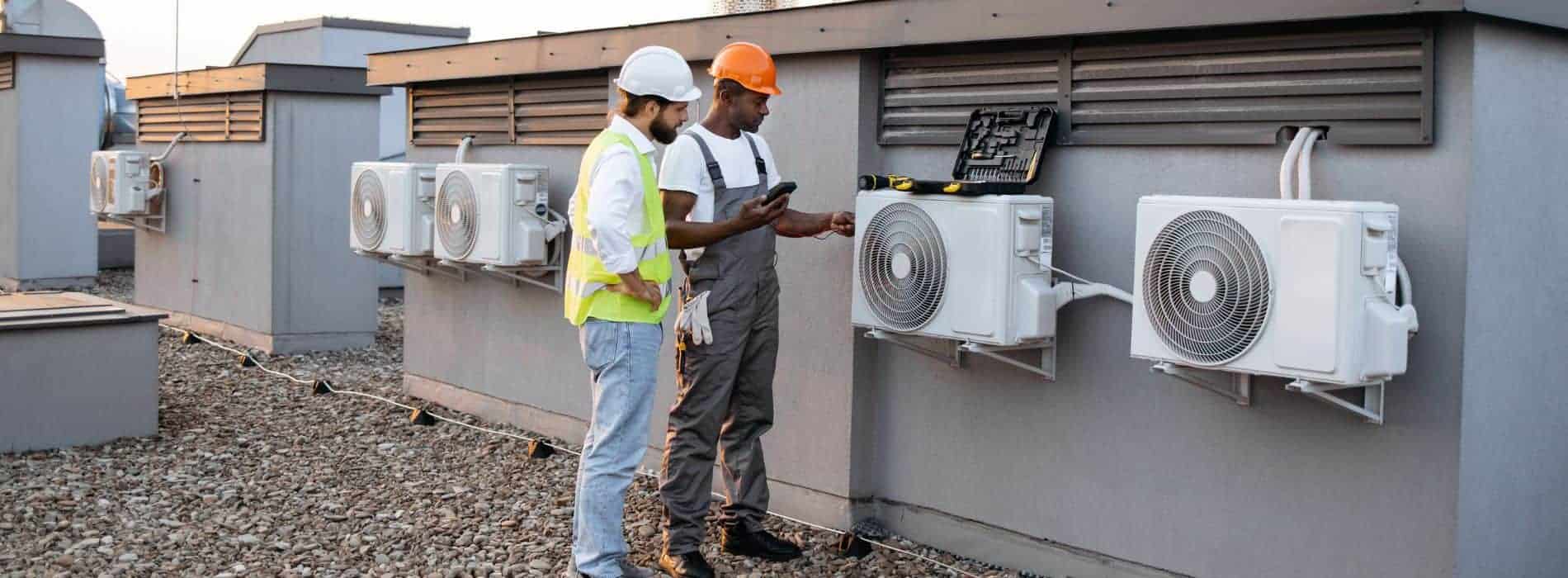
Skilled HVAC Technician/Hybrid technicians play a vital role in maintaining comfort, safety, and efficiency in homes and commercial spaces. They install, maintain, and repair the heating, cooling, and ventilation systems that keep environments running at their best.
This program provides the practical training and technical foundation needed to start your career as an HVAC apprentice and work toward full licensure. After completing the program and earning your certifications, you’ll be prepared for positions such as:
63,000+
According to the U.S. Bureau of Labor Statistics, HVAC continues to be one of the most stable and in-demand career fields. Employment for HVAC technicians is expected to grow by roughly 15% through 2026, offering strong job security and earning potential. The average annual salary is around $48,600, with entry-level positions starting near $34,000 and experienced professionals earning up to $78,000. Apprentices typically begin at about half that amount while gaining valuable hands-on experience that leads to higher pay as they advance.
Note: Actual salaries depend on factors such as experience, education, location, and employer. Data sources include ZipRecruiter.com and the U.S. Bureau of Labor Statistics, updated annually to reflect current trends.
The HVAC Technician/Hybrid field offers reliable job opportunities and room for advancement. This program equips you with the skills needed for entry-level roles in heating, ventilation, air conditioning, and refrigeration. You’ll learn to perform maintenance, troubleshoot electrical systems, handle refrigerants safely, and use professional tools with confidence.
After completing the 80–100 hour online course, you’ll earn an HVAC Technician/Hybrid Career Prep Professional Certificate of Completion and be ready to enter the workforce. You’ll also be prepared to take key industry certifications, including:
Course Access: Available online 24/7
Total Hours: 80–100
Estimated Completion Time:
This self-paced program lets you study on your own schedule and progress at a pace that works best for you.
You’ll have 12 months of full access to all course materials to complete your training and earn your certification.
Practical demonstrations, interactive simulations, and online exercises reinforce your understanding
Knowledge checks, quizzes, and final assessments
This course is built around active, hands-on learning. You’ll complete guided drills and practice activities designed to help you apply what you learn in real-world situations. Each chapter includes quizzes to test your progress and strengthen your skills along the way.
All course materials are included and accessible online, so there’s no need to purchase textbooks or additional resources.
Module 1: Introduction to HVAC
Gain an overview of the HVAC industry, system types, and key components. Learn essential safety practices and how to use basic hand and power tools. Refresh foundational math skills, including fractions and unit conversions used in the trade.
Module 2: HVAC Fundamentals
Explore how common systems heat and cool buildings and what happens inside each unit. Review maintenance procedures for air conditioning and heating equipment, and build a clear understanding of core electrical concepts and how they apply to HVAC systems.
Module 3: Electrical for HVAC/R
Learn to read HVAC symbols and wiring diagrams, use a multimeter, and work with switches, loads, and circuits. Study motors, contactors, thermostat types, and heating controls while practicing troubleshooting techniques. Finish by mastering the relationship between volts, amps, and ohms using Ohm’s Law.
Module 4: Refrigeration Systems
Understand refrigeration principles, including safety regulations, tools, system pressures, and refrigerant handling. Connect theory to practice by studying evaporators, condensers, and core troubleshooting steps for refrigeration components.
Module 5: Evacuation, Charging, and Diagnostics
Learn compressor operation and how to recognize failure symptoms. Practice leak detection, evacuation, and system charging methods using the proper tools and procedures. Apply diagnostics to identify issues in typical air conditioning systems.
Module 6: HVAC Troubleshooting
Dive into heat pump operation and practical troubleshooting methods. Measure blower airflow and pinpoint common electrical and mechanical problems found in standard split residential A/C systems.